


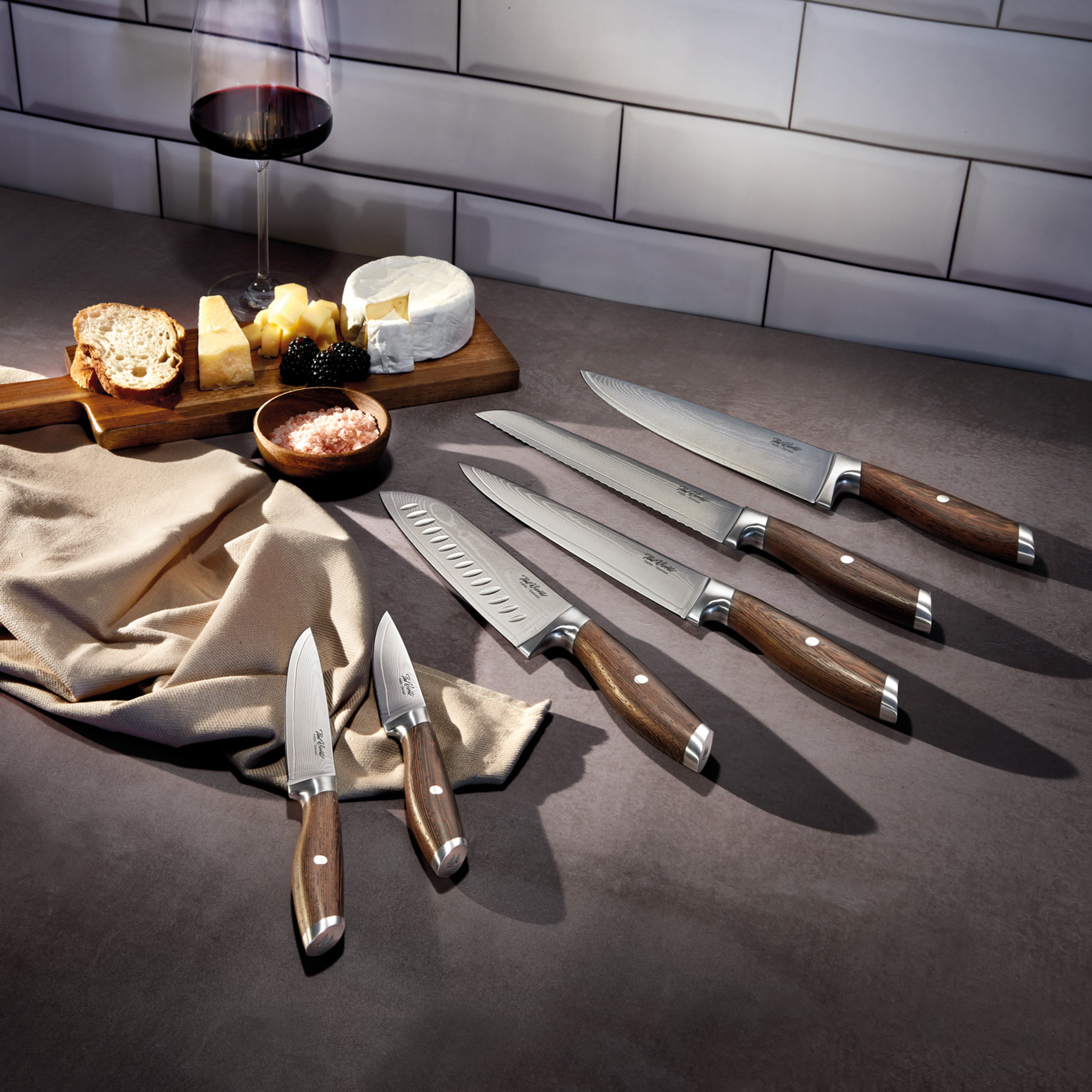
You probably know this: You use a single knife for everything. Cutting vegetables, filleting fish, carving meat. It works… but it’s not ideal. Because each knife was developed for a specific task. The shape of the blade, the length, the grind – all of this makes a difference. A chef’s knife is made for rocking cuts. A bread knife has serrations to cut through a crust without crushing the inside.
In this blog, we clearly explain which knife is meant for what. So you don’t just cut, but cut with knowledge. Because better cutting means more control – and more control makes cooking easier.
The basics: Why there are different knives
Knives may look similar but differ more than you think. Each knife has its own shape and function. It starts with the blade: Is it wide or narrow? Straight or slightly curved? Short or long? These differences determine how you cut.
A wide chef’s knife that tapers to a narrow tip is ideal for the rocking motion when chopping. A narrow and flexible blade moves more easily along bones. A serrated edge cuts through a crust without crushing the soft interior.
Length, thickness, and grind work together to give you more control. And control means safety. The right knife glides through ingredients without slipping.
So let’s take a look at the different kitchen knives and their uses.
Chef's knife

The chef’s knife is the true all-rounder in the kitchen. This is the knife you reach for first – and often last. It’s suitable for chopping, slicing, and rocking. Vegetables, meat, or herbs? No problem.
The blade is slightly curved. This creates a smooth rocking motion when cutting. It works quickly and controlled – ideal when you have a lot of prep work and want to work efficiently.
Santoku knife
The Santoku knife originally comes from Japan and resembles a chef’s knife but feels a bit different. The blade is usually a bit thinner and straighter. This makes it perfect for precise cuts.
It’s especially comfortable when cutting vegetables, fish, and meat – especially if you value clean, precise cuts and controlled movements.
Bread knife
You can immediately recognize a bread knife by its serrated blade. The serration ensures you cut through a hard crust without crushing the bread.
Not just for bread: Cakes, tarts, and even tomatoes can be effortlessly sliced with it. Firm on the outside, soft on the inside? Then this knife is your best friend.
Carving knife
This knife is long and narrow – and for good reason. It was designed to cut thin, even slices. Think roast, rolled roast, or large pieces of meat.
Thanks to its length, you can make long, flowing cuts with little pressure.
All-purpose knife
The utility knife lies between the vegetable knife and chef’s knife. Ideal for small to medium tasks where a large knife would be too much.
Practical for fruit, cold cuts, or smaller vegetables – when you want to cut something quickly without reaching for the big knife.
Vegetable knife
The vegetable knife is specially designed for processing vegetables. The blade is usually a bit shorter than a chef’s knife but taller and straight-shaped. This makes it ideal for slicing, dicing, and chopping vegetables.
Paring knife
Small, light, and agile. The paring knife is made for precision work. Peeling, cutting small pieces, or decorating – anything that requires a bit more attention.
Boning knife
This knife is narrow and often slightly flexible. Exactly what you need to cleanly separate meat from the bone. The shape follows the contours of the ingredient and provides control and precision – especially important for fine work.
Cleaver
The cleaver is wide and heavy. Made for power, not fine work. Think of large pieces of meat or tough ingredients.
This knife is used when weight and stability are more important than precision.
Steak knives
You use a steak knife at the table, not in the kitchen. The blade is sharp or serrated and designed to cut meat cleanly without tearing it.
The difference from kitchen knives? Steak knives are meant for serving and eating – not for preparation.
More knives
In addition, there are specialty knives like the fillet knife for fish, the nakiri knife for vegetable preparation, or the tomato knife with fine serration. They are less universal but make certain tasks much easier – especially if you often work with specific ingredients.
Which knives do you really need?
You don’t need a complete knife collection to cook well. With a few thoughtful choices, you can get very far.
The basics? A chef’s knife or santoku knife – your daily workhorse. With it, you cut vegetables, meat, and herbs effortlessly. Add a bread knife for anything with a hard crust and soft inside. And finally, a utility and vegetable knife for precise work and small tasks.
These are the essentials – of course, you can always add more. Do you often cook large pieces of meat? Then a carving knife makes sense.
Start with what you really use – not with what looks good in the knife block. This way, you build a set that fits your kitchen.
Know your knives
Now you know why not every knife is the same. Shape, length, and edge make the difference – and you feel it when cutting.
With the right knives, you work more easily and safely in the kitchen. Whether you cook daily or only cook big meals on weekends.
Discover the different kitchen knives at Amefa and choose the knives that suit your cooking style.
Share:
Porcelain vs. Stoneware – what is the difference?