


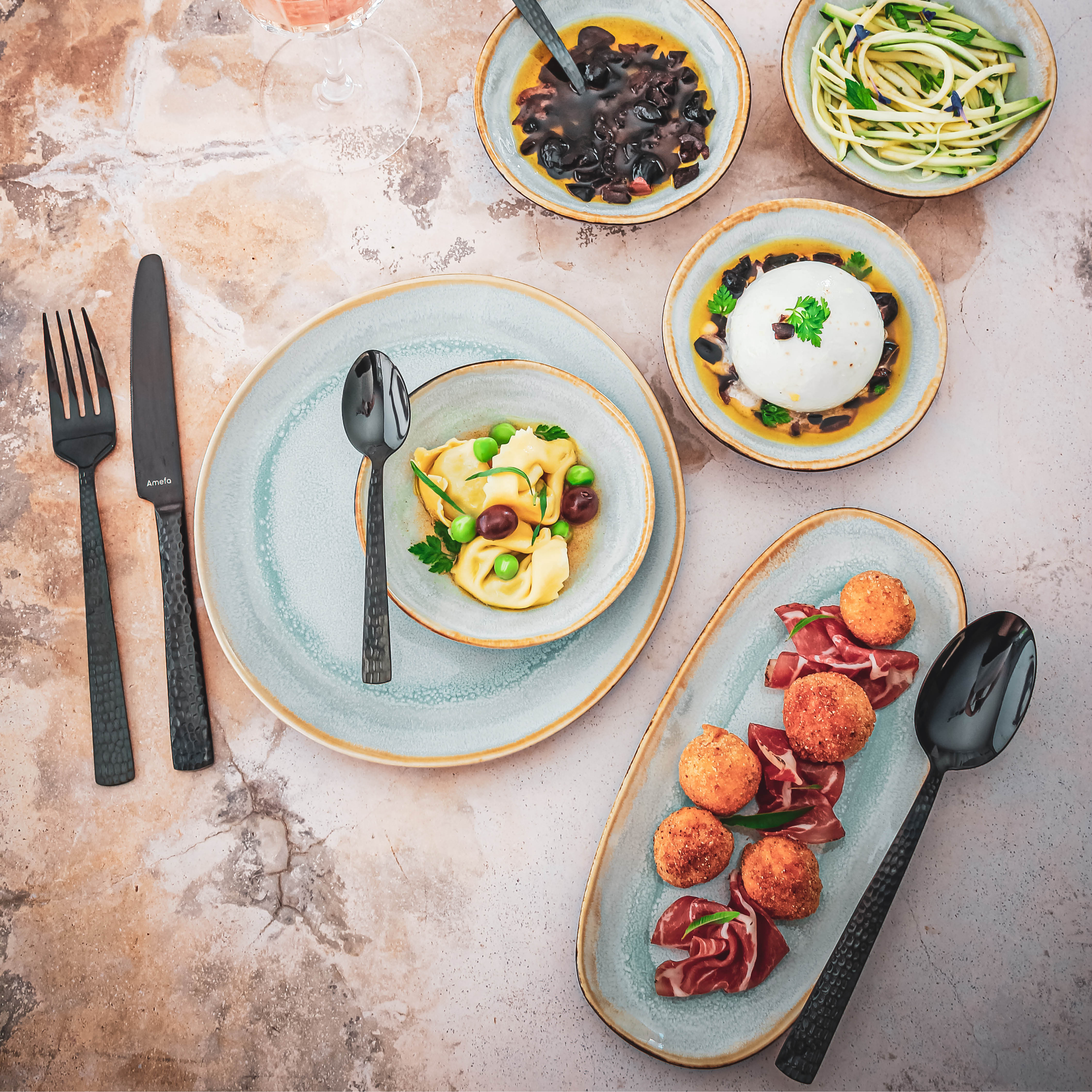
One plate looks clear and light, the other somewhat sturdier and more textured. But what exactly is on your table? Porcelain or stoneware? And does it really make a difference?
Just like with cutlery, many people want to know what material it is made from. The same applies to dinnerware – the material often raises questions here as well. This is completely normal because the material not only determines the appearance but also the feel and the way it is used.
In this blog, we explain the difference between porcelain and stoneware. That way, you’ll know exactly what’s on your table.
What is porcelain?
Porcelain dinnerware is known for its fine and elegant appearance. It is made from a very pure type of clay, often enriched with feldspar and quartz, and then fired at very high temperatures. This creates a smooth surface and a bright, almost noble look.
Don’t be fooled by its thin appearance: porcelain is surprisingly strong and durable. Especially due to the high firing temperatures, the material is particularly dense and resistant in everyday use. That’s why porcelain is found not only in private households but also frequently in the hospitality industry.
On the table, porcelain brings calm and clarity. It suits both a weekday meal and a festive dinner. This makes it a smart choice.
Porcelain is also practical: it is dishwasher safe and can easily be used in the microwave. However, it is better not to use it in the oven.
A good example of porcelain dinnerware is the Yaka collection from Médard de Noblat, such as the Yaka White bowls – minimalist in design, without decoration, and therefore versatile to combine.
What is stoneware?
Stoneware dinnerware is made from clay and fired at somewhat lower temperatures than porcelain. This gives it a sturdier character. It feels more robust and often appears a bit thicker – less strict, but more natural.
This is also reflected in the shapes: stoneware often has organic lines and subtle variations in color or glaze. No plate is exactly like another. And that’s exactly what makes its charm. It gives your table warmth and personality.
Stoneware is especially suited for relaxed moments – long evenings at the table, bowls in the center from which everyone serves themselves. It invites sharing.
Handling is also straightforward here: stoneware is dishwasher safe and microwave safe. However, it is not suitable for the oven.
At Médard de Noblat, this is particularly evident in the Shadow Aqua and Shadow Nacre collections with their reactive glaze and warm rim. The Oslo collection also belongs to this category: stoneware with a calm base and playful, organic shapes.
How are porcelain and stoneware made?
The difference starts in the kiln. Porcelain is fired at higher temperatures. This causes the material to fuse more strongly, creating a smooth, dense surface. The result: an elegant plate with clear lines and uniform finish.
Stoneware is fired at lower temperatures. This creates more texture and a more natural character. The material remains somewhat porous and has a warmer appearance.
This is especially visible in the Shadow collections: thanks to the reactive glaze, the surface reacts to heat and minerals during the firing process. This means every piece is unique.
It is precisely this combination of technology and craftsmanship that makes the difference. At Médard de Noblat, innovation and craftsmanship go hand in hand – clear where it should be, unique where it can be.
What suits you? Porcelain or stoneware?
There is no right or wrong here.
Do you like it clear, light, and timeless? Then porcelain is probably the logical choice. It brings calm to the table and combines well with other elements – ideal for a bright, minimalist style.
Are you looking for warmth and character instead? Then stoneware suits you better. It feels sturdier and gives your table more depth – perfect for long evenings, shared serving, and a relaxed atmosphere.
Ask yourself three questions:
-
What mood do you want to create?
-
How do you use your dinnerware most often?
-
What does your personal style say?
Maybe you decide clearly on one direction. Maybe you combine both. The great thing is: you decide what goes on your table.
Porcelain vs. stoneware
Porcelain and stoneware differ in appearance, feel, and use – and now you know why. Whether you choose clear and timeless or warm and full of character: with the collections from Médard de Noblat, there is always a style that fits your table.
Discover the porcelain and stoneware collections from Médard de Noblat at Amefa.
Share:
Know Knives – Which kitchen knife is used for what?
Why a Steak Knife Really Makes a Difference (and Which Type Suits You)