


Care Instructions for Dishwasher-Safe Cutlery
Dishwasher-safe cutlery made of stainless steel is particularly easy to care for and ideal for daily use. To keep your rust-free cutlery permanently shiny and hygienically clean, gentle cleaning is still recommended. Remove coarse food residues before the wash cycle and place the cutlery loosely in the cutlery basket so that water and detergent can reach all surfaces. A wash program at 50–55 °C is completely sufficient for high-quality stainless steel cutlery.
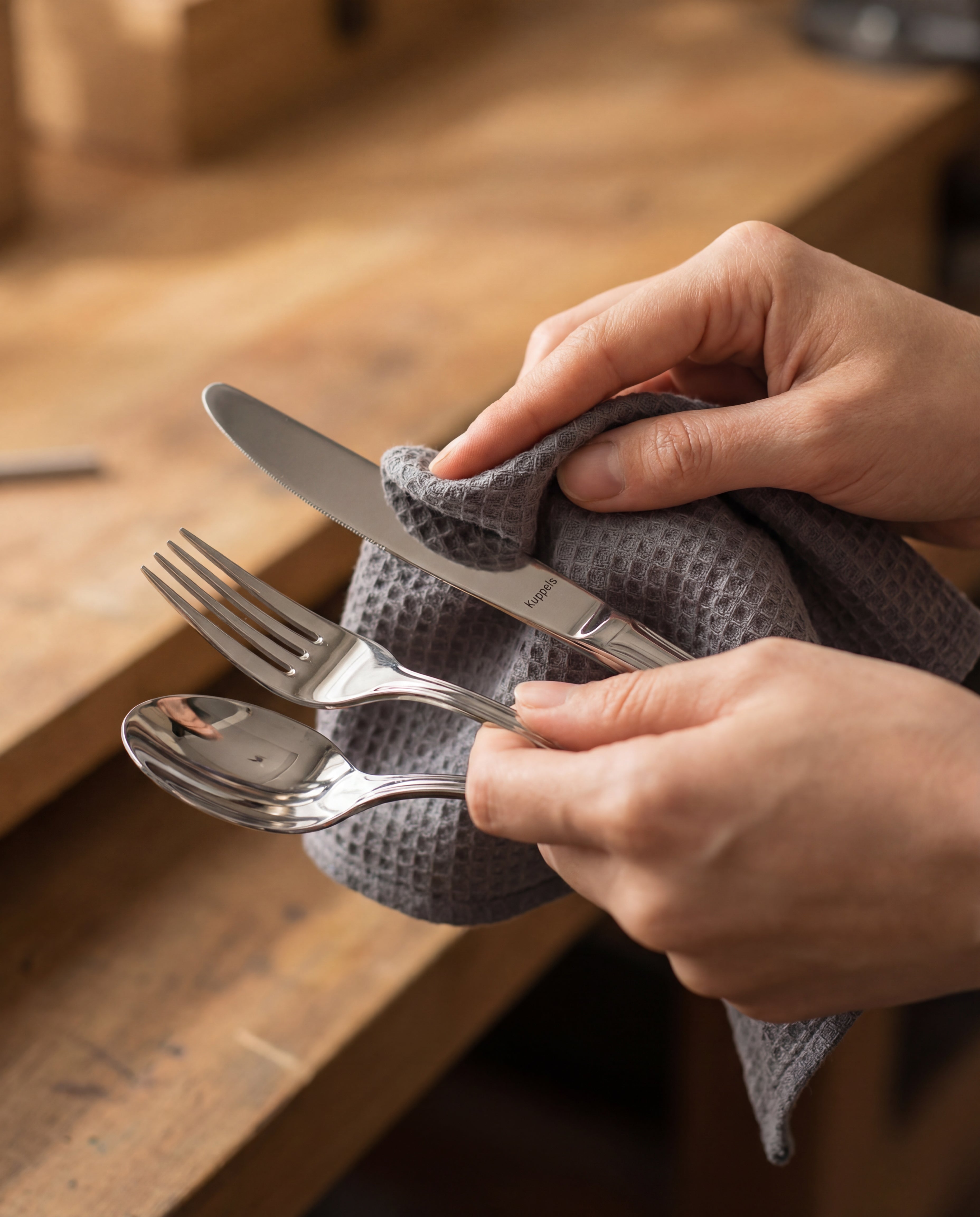
Use dishwasher salt and rinse aid to avoid limescale spots, and remove the cutlery as soon as possible after the wash cycle. If necessary, you can dry and polish it with a soft cloth. Despite the "dishwasher-safe" label, proper care significantly extends the lifespan of your cutlery and maintains its shine for many years.
Care Instructions for Cutlery with PVD Coating and Special Materials
For cutlery with PVD coating as well as models made from special or refined materials, we recommend gentle hand washing. Although many cutlery sets are generally robust, dishwasher cleaning can damage the surface, color, and coating over time. Careful hand washing helps ensure that your high-quality cutlery retains its color intensity, shine, and durability.
Clean the cutlery immediately after use with warm water, a mild detergent, and a soft sponge. Avoid aggressive cleaners, scouring agents, or steel wool, as these can damage the PVD coating. Afterwards, the cutlery should be thoroughly dried with a soft cloth to prevent water spots.
With the recommended hand cleaning, your refined cutlery remains high-quality, color-stable, and a stylish part of your table culture for a long time.
Care Instructions for Kitchen Knives
High-quality kitchen knives should always be cleaned by hand to preserve the sharpness of the blade permanently. Cleaning in the dishwasher can damage the edge and attack the sensitive steel due to high temperatures, aggressive detergents, and mechanical stress. This causes the knife to lose sharpness and quality more quickly.
Clean your kitchen knives immediately after use with warm water, a mild detergent, and a soft sponge. Then dry them carefully to avoid water spots and possible corrosion. Please do not use scouring agents or steel wool, as these can damage the blade surface.
Gentle hand cleaning and safe storage—such as in a knife block or on a magnetic strip—contribute significantly to the longevity, edge retention, and quality of your kitchen knives.
Care Instructions for Dishwasher-Safe Dishes
Dishwasher-safe dishes are especially practical for daily use but stay beautiful longer if you care for them properly. Remove coarse food residues before the wash cycle and arrange plates, cups, and bowls loosely in the dishwasher so that water and detergent can reach all surfaces. A standard program at 50–55 °C is usually sufficient to make your dishes hygienically clean.
Use dishwasher salt and rinse aid to avoid limescale spots and discoloration, and remove the dishes promptly after the wash cycle. If necessary, you can dry them with a soft cloth to prevent water spots. This way, your dishwasher-safe dishes remain shiny, hygienic, and a reliable companion in everyday life for many years.
Care Instructions for Pots and Pans
To ensure your pots and pans retain their quality, coating, and function for a long time, we recommend hand cleaning. Even dishwasher-safe models can be damaged over time by high temperatures and aggressive detergents in the dishwasher, especially on non-stick or coated surfaces.
Clean your pots and pans immediately after cooking with warm water, a mild detergent, and a soft sponge. Stubborn residues can be loosened by soaking, while scouring agents, steel wool, or aggressive detergents can damage the surface. Afterwards, thoroughly dry the cookware to avoid water spots and corrosion.
With this gentle care, the coating, shine, and function of your pots and pans are preserved long-term, ensuring perfect cooking results for many years.
Care Instructions for Wooden Cutting Boards
Wooden cutting boards are especially durable and hygienic when properly cared for. We recommend cleaning exclusively by hand, as water and heat in the dishwasher can cause the wood to swell, crack, and damage the surface.
Clean your board after each use with warm water, a little mild detergent, and a soft sponge. Then dry it thoroughly and occasionally rub it with food-safe oil to protect the wood and extend its lifespan. This way, your wooden cutting board remains beautiful, hygienic, and stable for many years.
Care Instructions for Dishwasher-Safe Cutting Boards
Dishwasher-safe cutting boards made of plastic or other robust materials are especially practical for daily cleaning. Remove coarse residues before the wash cycle and place the board loosely in the dishwasher. Choose a standard program to ensure thorough cleaning.
Despite being dishwasher-safe, it is advisable to remove the board promptly after the wash cycle and dry it with a cloth if necessary to keep it hygienic and dimensionally stable longer. This way, your cutting boards retain their function and cleanliness for many years.
Kitchen Utensils – Dishwasher
Some kitchen utensils can be conveniently cleaned in the dishwasher. Remove coarse food residues before the wash cycle and place the items loosely in the machine so that water and detergent can reach all surfaces. A standard program at 50–55 °C is usually sufficient to ensure hygiene and cleanliness.
After the wash cycle, it is advisable to remove the items promptly and dry them briefly if necessary to keep them functional, clean, and well-maintained for a long time.
Kitchen Utensils – Hand Cleaning
Some kitchen utensils should be cleaned by hand to protect the material and mechanics. Dishwasher cleaning can damage coatings, surfaces, or functional parts.
Clean the items after use with warm water, mild detergent, and a soft cloth or sponge, then dry them thoroughly. This way, your kitchen utensils remain durable, functional, and in good condition.
Share:
Why a Steak Knife Really Makes a Difference (and Which Type Suits You)
This is the difference between the steel types 18/10, 18/0, and 13/0